
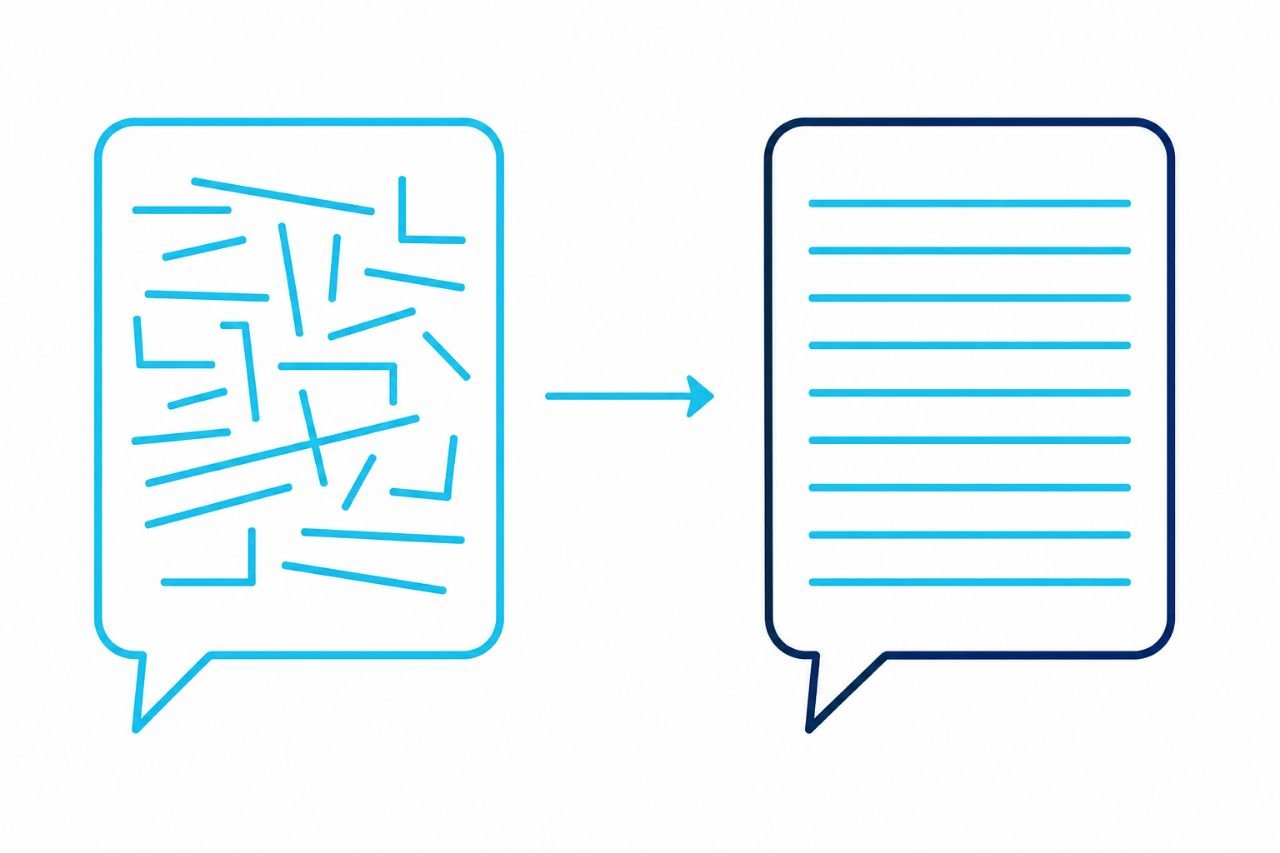
The language barrier in RISQ findings starts with a question most fleets answer without thinking twice. RISQ Q2.3 asks whether all crew can communicate effectively in the working language of the ship. The guide beneath it is more revealing than the question itself — it instructs the inspector to record the common language on board and the crew’s level of English proficiency. RightShip isn’t asking whether English proficiency is uniform. It’s building the assumption that it usually isn’t into the inspection process itself.
That’s the starting point for understanding the language barrier in RISQ findings, and it has nothing to do with competence. An officer who correctly identifies a mooring winch defect, understands exactly what caused it, and knows precisely what corrective action is needed hasn’t failed at the job. The job was done. What often doesn’t survive the handoff is the written account of it — compressed into a second or third language, under time pressure, by someone whose technical judgement was never in question and whose written English happens to be.
Where the Language Barrier in RISQ Findings Actually Bites
RISQ’s closeout requirement is where this becomes consequential rather than cosmetic. A vessel manager has fifteen days to provide a meaningful root-cause analysis, with corrective actions and sustainable long-term preventative actions, for every finding — and the inspection stays open until RightShip judges that response satisfactory. That response is almost always drafted by the same officer who understood the defect perfectly at the time, then written up afterward, then submitted in English to an inspector who never saw the original thinking, only the final text.
A closeout response with the reasoning intact but the English imprecise reads, to an inspector working through a stack of them, indistinguishable from a genuinely weak analysis. Vague phrasing looks like vague thinking even when the thinking underneath it wasn’t vague at all. The finding stays open longer than it needed to, not because the root cause was wrong, but because the sentence describing it didn’t land the way the officer meant it to.
This Isn’t a New Problem — It’s an Unaddressed One
OCIMF’s own human factors guidance makes a related point directly: people’s actions are rarely deliberate failures, and mistakes are typically the product of conditions and systems that make the work harder than it needs to be — not a deficiency in the person. A closeout report written under a fifteen-day deadline, in a second language, with no review step before submission, is exactly that kind of condition. The system asks for a specific kind of English-language clarity and gives almost no support for producing it consistently.
Most fleets don’t have a structured answer to this. What usually exists is an informal one — a superintendent or DPA who happens to be a strong English writer quietly cleaning up closeout responses before they go out, a task that depends entirely on whether that person has the time and whether anyone thought to ask them. It works until it doesn’t, and there’s no visibility into how often a finding stayed open an extra week because nobody was available to do that cleanup pass.
Where MarineKPI Fits In
This is a narrower, more specific version of the general connected-record argument, and it’s worth being precise about what it does and doesn’t do. Carrying an officer’s original note through to clear, auditable English isn’t about upgrading the finding or inventing detail that wasn’t there — it’s translation and clarity, not embellishment.
The technical content, the severity, the facts as reported stay exactly as the officer described them. What changes is whether an inspector reading the closeout response fifteen days later reads the same clarity of thinking the officer actually had at the time, rather than a version of it thinned out by a rushed second-language write-up.
The Practical Point
The language barrier in RISQ findings isn’t solved by better crew English training, useful as that is on its own terms — RISQ itself already assumes proficiency varies and builds that into the inspection.
It’s solved by not asking a fifteen-day closeout deadline, working across a genuine language barrier in RISQ findings, with no review step, to carry the full weight of whether a genuinely sound root-cause analysis reads as one
More from the MarineKPI Series
- Your Incident Form Asks for a Cause. That Question Is the Problem.
- PSC Code 10112. SIRE 4.1.1. RISQ 2.14. Same ECDIS Problem, Three Different Names.
- One Finding, Five Frameworks: Why Vetting Inspection Findings Don’t Line Up
- Root Cause Analysis in Shipping: Why 5 Whys Stops Where MSCAT Keeps Going
- The RISQ DryBMS Question Nobody Has to Verify — Yet
- TMSA and DryBMS Compliance: What Both Standards Actually Require From Your Evidence