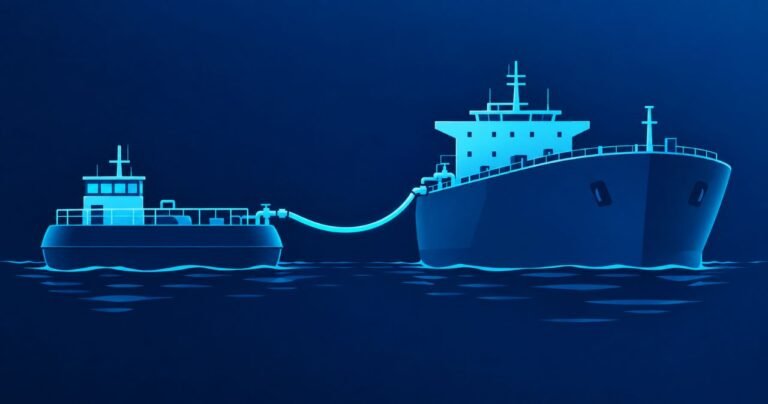


TMSA compliance runs across thirteen elements, each scored against four progressive stages, resubmitted to the OCIMF portal every twelve months. That’s the whole shape of it. Most of the confusion I see isn’t about any single element — it’s about not having the full picture in one place: which elements a fleet is actually strong on, which are thin, and how a separate but increasingly related framework, DryBMS, fits in if the fleet runs dry bulk tonnage alongside tankers.
This page is that picture, for both frameworks. Five of TMSA’s thirteen elements and six of DryBMS’s thirty subject areas have a full worked breakdown elsewhere on this site — linked directly below. Everything else is listed here for completeness, without a dedicated deep dive yet.
The Thirteen Elements of TMSA Compliance
Element 1 — Management, Leadership and Accountability. Whether HSSE commitment is documented, understood at every level, and followed up on, not just stated in a mission document.
Element 2 — Recruitment and Management of Shore-Based Personnel. How shore staff are selected, trained, and kept competent for the roles they hold.
Element 3 — Recruitment and Management of Vessel Personnel. The same question, applied to crewing — competence, certification, and retention.
Element 4 — Vessel Reliability and Maintenance. Whether defect and maintenance records actually reconcile with what a superintendent finds on board. The TMSA Engine Room Audit covers what Stage 4 requires here.
Element 5 — Navigational Safety. Passage planning, bridge procedures, and how navigational risk is actually managed rather than documented. TMSA Navigational Audit covers each stage; The Ship’s Navigational Audit looks at the same discipline from a wider first-line-of-defence angle.
Element 6 — Cargo, Mooring and Vessel Operations. The largest element in practice, covering both cargo handling and mooring operations. The TMSA Cargo Audit and The TMSA Mooring Audit each work through Stage 4 for their half of it.
Element 7 — Management of Change. Whether changes to equipment, procedures, or crewing are assessed for risk before they’re implemented, not after something goes wrong.
Element 8 — Incident Investigation and Analysis. Root cause discipline — whether an investigation finds the actual cause or stops at the first plausible one.
Element 9 — Safety Management. The TMSA Safety Audit walks through what Element 9 Stage 4 actually requires.
Element 10 — Environmental and Energy Management. Emissions, waste, and energy efficiency performance and reporting.
Element 11 — Emergency Preparedness and Contingency Planning. Whether drills and contingency plans reflect realistic scenarios or a checklist exercise.
Element 12 — Measurement, Analysis and Improvement. Only as strong as the audit and inspection data feeding into it. The Audit Is Closed. The Problem Isn’t. covers what that looks like in practice.
Element 13 — Maritime Security. ISPS-aligned security management and how it’s demonstrated, not just certified.
The Four Stages, Briefly
Every element runs Stage 1 through Stage 4 — a documented system, then one that’s actively implemented, then one where performance data is reviewed and fed back, then one with external benchmarking and measurable outcomes. The stages are sequential, and the declaration is only worth as much as what a fleet can actually evidence when an oil major auditor comes looking. TMSA Self Assessment covers the full mechanics of how that declaration works and what over-declaring costs.
Where DryBMS Fits, and What All Thirty Subject Areas Cover
DryBMS is the dry bulk equivalent of TMSA, developed jointly by INTERCARGO and RightShip and administered through the Dry Bulk Centre of Excellence (DBCE). It’s structured differently to TMSA’s thirteen elements — thirty subject areas across four pillars, Performance, People, Plant, and Process — but the same basic-to-excellence progression TMSA introduced to tankers runs through it: four compliance levels, self-assessed and scored with the same don’t-over-declare cascade TMSA Self Assessment describes for its own framework. Submission is currently voluntary and has no bearing on a vessel’s RightShip star rating, but RISQ 3.2 already asks whether a manager subscribes to DBCE and has completed a DryBMS self-assessment — neither counts as a finding yet, but the direction is visible. The RISQ DryBMS Question Nobody Has to Verify — Yet covers what those two questions actually mean for an inspection right now, and TMSA and DryBMS Compliance covers what both frameworks demand from the same evidence base for a fleet running both.
DBCE itself designates seventeen of the thirty subject areas as priority areas — a higher potential impact for injury, environmental damage, or operational performance if the area is done badly. Priority status makes no difference to the score; it’s DBCE’s own suggestion of where to focus improvement first. Priority areas are marked below. Six subject areas — all of them priority areas bar one — have a full worked breakdown on this site.
Performance
The company promotes a strong, proactive HSSE culture throughout the organisation, with objectives set, communicated, and measured.
Commitment to HSSE (Subject Area 1, priority area). Whether senior management’s HSSE commitment is genuine and resourced, not just stated in a mission document.
Vessel Visits and Communications (Subject Area 2). Whether managers’ own actions and behaviours create an environment where the workforce is informed, involved, and enabled.
SMS Governing Documents (Subject Area 3). Whether policies, practices, and procedures are actually documented, maintained, and followed, not just written once.
HSSE Objectives and KPIs (Subject Area 4). Whether the company’s leading and lagging indicator system gives a genuinely clear picture of HSSE performance.
Audit Planning, Review and Close Out (Subject Area 5). Whether internal audits are planned, staffed, and followed through to close-out. The DryBMS Audit Planning and Close Out Standard covers what each level requires.
Master’s Review and Company Evaluation (Subject Area 6, priority area). Whether the company periodically and systematically reviews the SMS’s own adequacy, not just individual findings within it.
People
Whether the organisation is fit for purpose, staffed with competent people and teams, shore and ship.
HR Management and Recruitment (Office) (Subject Area 7, priority area). Whether shore staff are deployed with the competence and resources to deliver the company’s objectives.
Technical and HSSE Training (Office) (Subject Area 8). Whether shore staff hold the qualifications and skills the role actually needs, current and future.
Crew Management and Recruitment (Subject Area 9, priority area). Whether competent people and adequate resources are deployed aboard every vessel in the fleet.
Crew Technical and HSSE Training (Vessels) (Subject Area 10, priority area). Whether vessel staff hold the qualifications and skills their onboard roles need, now and as requirements change.
Crew Familiarisation (Subject Area 11). Whether a genuine programme exists to make crew familiar with the ship’s arrangements and the systems they’ll be called on to use.
Contractor Management (Subject Area 12, priority area). Whether contractors and sub-contractors are managed with the master’s and officers’ safety responsibilities clearly in view.
Crew Welfare (Subject Area 13). Whether a genuine programme exists for the wellbeing of vessel personnel, not just a policy statement.
Plant
Whether the ships and their equipment are fit for purpose across the whole lifecycle of operation.
Maintenance (Subject Area 14, priority area). Whether a programme genuinely inspects and maintains plant and assets, rather than just logging that maintenance happened.
Dry Dock and Surveys (Subject Area 15). Whether dry docks and repair periods are actively managed against class status, not scheduled reactively.
Critical Equipment (Subject Area 16, priority area). Whether an inspection programme actually verifies critical equipment and systems are fit for service, documented as such.
Engine Room Operations and Bunkering (Subject Area 17, priority area). Whether machinery plant and bunkering operations are run to prevent injury and environmental damage. The DryBMS Engine Room and Bunkering Standard covers what each level requires.
Inspection Planning, Review and Close Out (Subject Area 18). Whether shore-based personnel actually carry out inspections monitoring vessel and equipment condition, not just schedule them.
Process
Whether procedures for safe, compliant operations are documented and rigorously followed.
Mooring and Anchoring (Subject Area 19, priority area). Whether mooring, anchoring, and access operations are planned and run without injury to people or damage to the environment. The DryBMS Mooring and Anchoring Standard covers what each level requires.
Cargo and Ballast (Subject Area 20, priority area). Whether cargo and ballast planning and operations are genuinely carried out without harm, not just documented as such. The DryBMS Cargo and Ballast Standard covers what each level requires.
Bridge Procedures and Standards (Subject Area 21, priority area). Whether navigation and bridge team management are planned and carried out without injury or environmental damage. Bridge Procedures Is a DryBMS Priority Area covers what each level requires.
Risk Assessment and Management (Subject Area 22, priority area). Whether operating risks are genuinely assessed, prioritised, and managed, not assessed once and filed. The DryBMS Risk Assessment Standard covers what each level requires.
Permit to Work (Subject Area 23, priority area). Whether a formal control-of-work process actually governs how hazardous tasks are authorised and controlled.
Safety Culture Improvement (Subject Area 24). Whether a genuine programme exists to develop and maintain a safety culture, not just measure one.
Environmental Management (Subject Area 25). Whether environmental impact is actively managed and integrated into the SMS, not addressed separately from it.
Management of Change, Including Vessel Acquisition (Subject Area 26, priority area). Whether temporary and permanent changes are formally evaluated, approved, and communicated before they affect operations.
Security Management (Subject Area 27). Whether processes genuinely maintain the security of the workforce, vessels, and premises.
Cyber Security (Subject Area 28). Whether IT and digital process-control systems are actively managed for risk to integrity, availability, and confidentiality, not assumed secure.
Emergency Planning, Including Crisis Management (Subject Area 29, priority area). Whether the company is genuinely prepared to respond promptly to emergencies, not just holds a plan document.
Incident Reporting, Investigation and Training (Subject Area 30, priority area). Whether incidents are reported and investigated to find root causes and drive corrective action, not just logged and closed.
Where This Goes From Here
Thirteen TMSA elements and thirty DryBMS subject areas is a lot of ground, and not all of it has a dedicated page yet — this page exists so the full shape of TMSA compliance and DryBMS is visible in one place regardless. If you want an independent read on where your fleet genuinely sits, across any of these, tanker or dry bulk, get in touch.
Two companion guides: the VDR audit guide covers what recorded bridge data shows about how procedures are followed at sea, and the ship safety management system guide covers the SMS those frameworks assess.
More from the HSEQ Series
→ Explore our HSEQ Outsourcing Service — Get HSEQ Outsourcing Support
- The DryBMS Audit Planning and Close Out Standard: What Excellence Actually Requires
- The DryBMS Engine Room and Bunkering Standard: What Excellence Actually Requires
- The DryBMS Risk Assessment Standard: What Excellence Actually Requires
- The DryBMS Mooring and Anchoring Standard: What Excellence Actually Requires
- The DryBMS Cargo and Ballast Standard: What Excellence Actually Requires
- TMSA Self Assessment: Declare What You Can Sustain, Not What You Aspire To
- The Audit Is Closed. The Problem Isn’t.
- The Ship’s Navigational Audit Is Your First Line of Defence. Most Fleets Don’t Treat It That Way.
- The TMSA Safety Audit: What Element 9 Stage 4 Actually Requires
- The TMSA Engine Room Audit: What Element 4 Stage 4 Actually Requires
- The TMSA Mooring Audit: What Stage 4 Requires for Element 6A
- The TMSA Cargo Audit: What Stage 4 Requires for Element 6
- TMSA Navigational Audit: What Each Stage Actually Requires