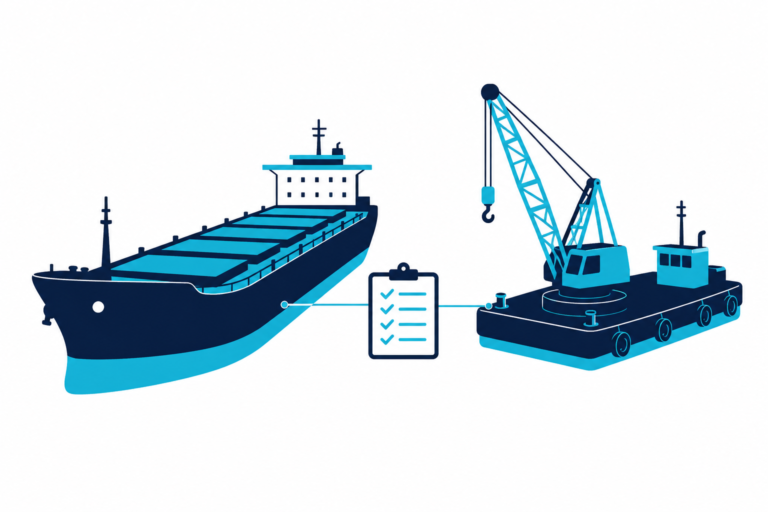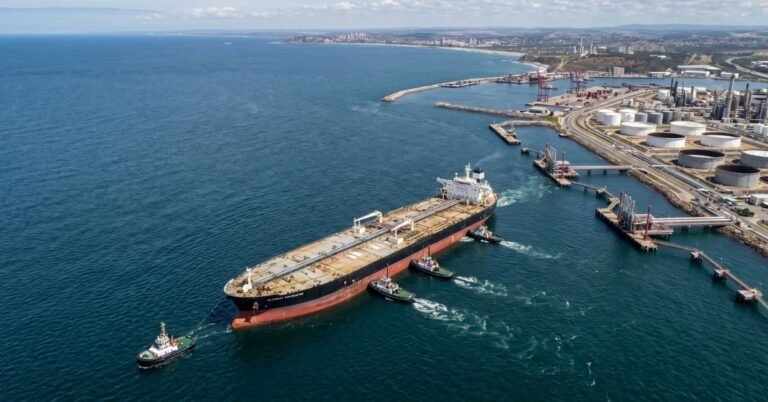


The RightShip Inspection Ship Questionnaire — RISQ — is the primary vetting instrument for dry cargo operators in the bulk and general cargo sector. If your vessel trades through charterers who use RightShip’s risk profiling tools, a RightShip RISQ inspection will at some point determine how that vessel is assessed. The outcome feeds directly into RightShip’s vessel safety rating and influences which cargoes, which charterers, and which trade routes remain accessible.
Preparation matters. Not because the inspection standard is opaque, but because the gap between a prepared vessel and an unprepared one shows up immediately — and findings recorded on the day carry consequences that extend well beyond the inspection itself.
What the RISQ Is Built On
The RISQ is a finding-based inspection covering statutory requirements alongside recognised industry best practices — drawing on IMO, ILO, ISO, OCIMF, ICS, P&I loss prevention bulletins, and industry codes of practice. This means the inspection goes beyond minimum regulatory compliance. A vessel that meets statutory requirements but falls short of established industry practice will still generate findings.
Understanding RightShip requirements this way — as an amalgam of statutory minimums and industry best practice, not a single fixed checklist — is the first mistake most operators make in preparation.
A Finding is recorded where objective evidence indicates non-fulfilment of a specified requirement. The inspector is required to use objective evidence — the word of ship’s staff alone is not considered sufficient. Crew familiarity with a task, and the ability to demonstrate that task, is considered objective evidence.
That last point is the one most vessels underestimate going into a RightShip RISQ inspection.
As of February 2026, all RightShip inspections are conducted in accordance with RISQ v3.2.
Demonstration Is Evidence
Across navigation, ISM, and cargo operations, the RISQ asks whether officers are familiar with procedures — and the inspector tests that familiarity by asking officers to demonstrate. Familiarity with ECDIS, with the company’s navigation instructions, with emergency contingency plans, with gas detector operation — these are not paper checks. An officer who cannot demonstrate competency at the point of inspection generates a Finding, regardless of what the training records show.
This is where preparation directly changes outcomes. A vessel whose officers have walked through the ECDIS contingency procedure in the days before the inspection will perform measurably better than one where that procedure exists in the SMS but has not been rehearsed recently. The inspection is a snapshot taken on the day. The snapshot does not account for what the officer knew last month.
This is exactly the gap our physical inspection service is built to close — our inspectors board with the same demonstration-based mindset as a RightShip inspector, and critique drills and crew interviews against the same standard before the real inspection does.
Where a RightShip RISQ Inspection Finds What Ships Leave Exposed
Based on the RISQ v3.2 structure, findings tend to cluster in predictable areas.
Navigation (Section 3). Master’s standing orders are checked for specific content — visibility criteria, minimum CPA thresholds, conditions for calling the Master, and ECDIS display layer requirements for different navigational conditions. If that detail is absent, a Finding is recorded. Radar performance checks and logbook entries are verified. ECDIS familiarisation certificates are checked against the equipment actually fitted on board — generic type-approval training for a different make or model does not satisfy the requirement.
ISM System (Section 4). This is the largest section of the questionnaire and carries the greatest potential for accumulated findings. Superintendent visit records, enclosed space procedures, hot work permits, drill records, gas detector tests, incident reporting — all are verified against objective evidence. The inspector checks whether SMS procedures are understood by the crew, not merely whether they are filed and signed.
Certification and Personnel (Section 2). Officer matrix accuracy, rest hour records in the correct ILO format, ECDIS familiarisation certificates, crew working language verification — these are documentation checks, but the inspector goes beyond the paper. If the Master cannot demonstrate the validity of an electronic certificate to the inspector’s satisfaction, a Finding is recorded.
Cargo Operations (Sections 8 and 9). Hatch cover condition, lifting appliance certificates and operational records, cargo securing arrangements, and damage checks are physical observations. A record that states an item was inspected is not the same as the item being in the condition the record implies.
Machinery Space (Section 13). Planned maintenance records, sounding pipe arrangements, engine control console condition, steering gear — maintenance records are cross-checked against physical condition. PMS entries need to reflect actual maintenance completed, not scheduled work carried forward.
The Finding Is Recorded at the Location, Not the Closing Meeting
The RISQ process requires that each finding is discussed with the officer accompanying the inspector at the time and location of discovery — not deferred to the closing meeting. By the time the closing meeting takes place, the findings are already recorded and the inspector is not permitted to advise on how to rectify them.
The vessel’s manager then has fifteen days from receipt of the inspection findings to submit a closeout for each one. That submission requires a root cause analysis — an explanation of why the finding occurred, the corrective action taken, and the preventive action to prevent recurrence. The closeout is reviewed independently by two RightShip inspection superintendents, neither of whom was the inspector who attended the vessel. Each finding is graded high, medium, or low risk through a peer review process.
The inspection is not complete until a satisfactory response has been received for every finding. If the number of findings is high, managing fifteen-day closeouts with root cause analysis for each one becomes a significant office burden on top of normal fleet operations. Reducing that number through preparation is a better use of time than managing the response process under deadline pressure.
Inspection Format Options
RightShip offers three inspection formats worth understanding before scheduling.
A standard inspection is the conventional format — one inspector, full RISQ conducted on the day. A hybrid inspection allows the vessel’s manager to upload all documentation to a dedicated microsite for the inspector to review before boarding, leaving only the physical inspection to be completed on the vessel. Under RISQ 3.2, this reduces onboard time from approximately 12 hours to 8–10 hours. Where port time is constrained, this is a practical option — and it concentrates preparation effort on the physical walk rather than splitting attention between documentation and the vessel simultaneously.
A dual inspection divides the RISQ between two inspectors with a lead inspector coordinating the process, reducing onboard time to approximately 6–7 hours. For vessels with tight port windows, knowing which format applies matters for how preparation time is allocated.
Where Remote Preparation Is Practical
A pre-RISQ physical attendance — an independent assessor walking the vessel before the inspector boards — gives the clearest picture of actual condition. It replicates the inspector’s walk and identifies findings before they are recorded. But physical attendance is not always practical. Budget, port timing, and fleet distribution all constrain it.
A structured remote preparation process covers a substantial part of the ground. SMS procedures relevant to the key RISQ sections can be reviewed against the questionnaire requirements before the inspection. Standing orders, maintenance records, officer matrix accuracy, rest hour formats, and certification status can all be verified and corrected remotely. Officers can be briefed on demonstration requirements and walked through the specific competency checks the inspector will apply.
What remote preparation cannot replace is a physical walk of the vessel — machinery space condition, hatch cover state, deck equipment, mooring gear. For those areas, preparation is focused on ensuring records accurately reflect actual condition and flagging any physical deficiencies that need to be resolved before the inspector arrives.
How VragaMarine Supports RISQ Preparation
VragaMarine has carried out navigational and safety management assessments for tanker operators to the standards applied by major oil company vetting programmes. That work develops a clear, systematic understanding of what rigorous inspection requires — what constitutes objective evidence, where inspectors concentrate their attention, and what preparation actually changes outcomes versus what looks compliant on paper but does not hold up on the day.
We bring that same approach to RightShip RISQ inspection preparation for dry cargo operators. Our remote assurance work covers the documentation and procedural review across the key RISQ sections, officer briefing on demonstration requirements, and identification of gaps that need to be addressed before the inspector boards.
If your vessel has a RightShip RISQ inspection coming up and you want a structured independent review before the inspector arrives, consider our Remote Assurance service.
More from the Vetting Series
→ Explore our Remote Assurance Service — See the Remote Assurance Audit