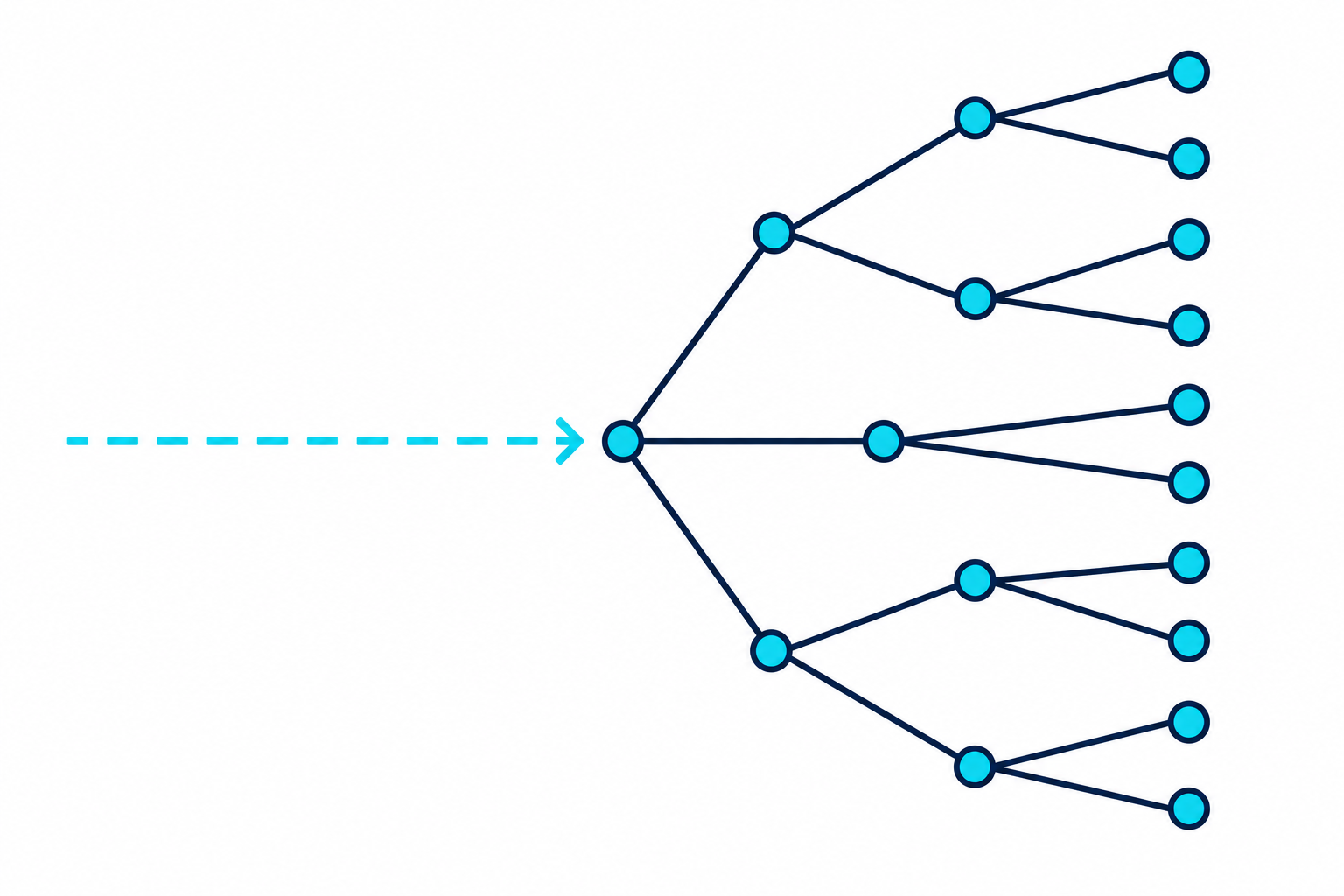


Every negative observation in SIRE 2.0 gets classified two ways: what’s being reported on (the Subject of Concern) and what’s actually gone wrong (the Nature of Concern). For Hardware, that’s a defect classification tree. For Process, it’s TMSA-based coding. For Human observations, it’s the nine SIRE 2.0 Performance Influencing Factors — and this is the part of the Negative Observation Module that gets the least explanation, despite being the one most open to interpretation at the point an inspector selects it.
OCIMF’s own worked example makes the mechanics clear. An inspector finds the isolating valves for a deck foam line seized open, with no maintenance task in the PMS to catch it, and an accompanying officer who doesn’t know the valves’ location or purpose. That single finding gets recorded three times, once under each SOC/NOC pairing: Hardware (Fire Fighting Systems – Foam; No maintenance task developed), Process (the PMS schedule; Procedure accuracy/correctness), and Human (the officer’s rank grouping; PIF 1 and PIF 3 selected together — recognition of the task’s safety criticality, and whether the procedure was accessible and understood).
That third layer — the Human one — is where most of the interpretive weight sits, because unlike the Hardware and Process trees, which describe conditions, the nine SIRE 2.0 Performance Influencing Factors describe why a person’s performance fell short — a genuinely harder judgement to standardise across inspectors than a hardware defect or a procedure gap.
1. Recognition of Safety Criticality of the Task or Associated Steps
This asks whether the person understood how much the task mattered, not just how to do it. In the deck foam example, the officer could likely operate the system in a routine sense but didn’t recognise that unfamiliarity with the isolating valves specifically was a safety-critical gap, not a minor detail. This PIF gets selected when someone technically knew the steps but hadn’t internalised why a particular step carried real consequence if missed.
2. Custom and Practice Surrounding Use of Procedures
This is about the gap between the written procedure and what actually happens routinely on board — informal shortcuts, workarounds that have become normalised, or a way of doing something that diverges from the documented method without anyone treating that divergence as unusual. It’s a different failure from PIF 3 below: this one isn’t about whether the procedure is good, it’s about whether the crew’s actual habit has drifted from it.
3. Procedures Accessible, Helpful, Understood and Accurate for Task
This is the PIF that most directly overlaps with the Process observation, and it’s worth being precise about the distinction. The Process NOC records whether the procedure itself has a defect — inaccurate, unclear, outdated. This Human PIF records whether that specific person, in that specific moment, could actually access, understand, and correctly apply it.
A perfectly accurate procedure that someone genuinely couldn’t locate or interpret at the point of need still triggers this PIF, even with no Process-side defect at all. It’s the SIRE 2.0 Performance Influencing Factor most likely to be selected alongside a Process observation on the same finding, precisely because the two describe different sides of the same procedural gap.
4. Team Dynamics, Communications and Coordination With Others
This covers failures that live between people rather than within one person — a handover that didn’t transfer critical information, a task that depended on two people communicating and one assumed the other knew something they didn’t, or a team that wasn’t actually functioning as a team at the point the task required it.
5. Evidence of Stress, Workload, Fatigue, Time Constraints
This is the SIRE 2.0 Performance Influencing Factor most directly tied to conditions rather than individual failing — someone under enough time pressure, fatigue, or workload that their judgement or attention was measurably affected. It requires evidence, not assumption; an inspector selecting this PIF should be pointing to something observable — rest hour records, visible workload at the time, a task rushed against a deadline — not inferring stress from the fact that a mistake happened.
6. Factors Such as Morale, Motivation, Nervousness
A narrower, more psychological category than PIF 5 — this covers cases where the person’s engagement with the task itself, rather than external pressure, appears to have affected performance. Nervousness during an inspection itself is a specific, recognised version of this — a crew member who performs a task differently, and worse, because they’re being observed.
7. Workplace Ergonomics Including Signage, Tools, Layout, Space, Noise, Light, Heat, etc.
This is the physical-environment PIF — whether the space, equipment, and conditions the task was performed in actively worked against good performance. Poor signage on an isolating valve, inadequate lighting in the space where it needed to be operated, or noise levels that interfered with communication all sit here. It’s the PIF most likely to have an immediate, low-cost fix, since the answer is often physical rather than procedural.
8. Human-Machine Interface (e.g., Controls, Alarms, etc.)
This is about whether the equipment itself was designed or configured in a way that made correct operation harder than it needed to be — controls that aren’t intuitively arranged, alarms that don’t clearly indicate what’s actually wrong, or an interface that requires specialist knowledge to interpret correctly under pressure. Distinct from PIF 7’s broader ergonomics: this is specifically about the interface between person and machine, not the surrounding physical space.
9. Opportunity to Learn or Practice
This asks whether the person had ever actually been given a genuine chance to build competence at the task before being expected to perform it — as opposed to being trained on paper but never practising it, or practising it so infrequently that skill genuinely degraded between occasions. It’s the PIF that points most directly at training programme design rather than at the individual or the immediate task conditions.
Why SIRE 2.0 Performance Influencing Factors Are Harder to Standardise Than Hardware or Process Findings
The nine SIRE 2.0 Performance Influencing Factors aren’t interchangeable ways of saying “human error.” Each one implies a different corrective action. PIF 5 (stress, workload, fatigue) points toward manning and scheduling. PIF 7 and 8 point toward physical or equipment redesign. PIF 9 points toward the training programme itself, not the individual crew member. Selecting the right PIF — or the right combination, as the worked example shows with PIF 1 and PIF 3 together — is what turns a Human observation from “someone made a mistake” into something a fleet can actually act on, in the same way a well-chosen root cause does for a Hardware or Process finding.
That’s also where inconsistency creeps in. Two inspectors observing the same underlying situation could reasonably select different PIFs depending on how they read the crew member’s understanding versus the conditions around them — which is exactly why OCIMF’s own worked example is useful as a calibration reference, not just an illustration.
More from the Vetting Series
→ Explore our Remote Assurance Service — See the Remote Assurance Audit
- The STS Unit Questionnaire: What RightShip Actually Wants to Know About the Barge, Not the Ship
- What a RightShip RISQ Inspection Actually Tests — And Where Preparation Makes the Difference
- How the Vetting System Actually Works — SIRE, RightShip, PSC, and Why the Inspection Is Only Part of the Picture