

TMSA and DryBMS compliance get discussed as two separate obligations — one for tankers, one for dry bulk. In the audits I run across both sectors, they’re increasingly the same conversation. Both frameworks are built on the same premise: self-assessment against a maturity model, evidence-based scoring, and a requirement that the evidence actually holds up when someone other than the person who wrote it goes looking for it.
That last part is where most ship managers lose ground — not because the SMS is wrong, but because the proof is scattered across PSC records, audit reports, KPI spreadsheets, and inspection findings that were never built to talk to each other.
What TMSA Actually Asks a Compliance System to Prove
TMSA runs across 13 elements, each scored against four progressive stages — from basic compliance through to a level where benchmarking and continuous improvement are demonstrably built into how the company operates, not just written into the manual. The framework requires it be resubmitted every twelve months, which means the evidence base isn’t a one-time exercise — it has to stay current, element by element, year after year.
The elements most exposed to weak evidence in my experience are the ones that depend on cross-referencing: Element 12 (measurement, analysis and improvement) is only as strong as the audit and inspection data feeding into it, and Element 4 (reliability and maintenance) depends on defect and maintenance records actually reconciling with what superintendents observe on ship visits. When that data lives in five different systems — or five different spreadsheets — Stage 3 and 4 evidence becomes something someone assembles manually before the audit rather than something the company can produce on demand.
What DryBMS Asks For — And Where Dry Bulk Managers Get Caught Out
DryBMS, developed jointly by INTERCARGO and RightShip and now administered through the Dry Bulk Centre of Excellence, is structured around four pillars — Performance, People, Plant and Process — assessed across four compliance levels that map onto the same basic-to-excellence progression TMSA introduced to tankers years ago. It’s voluntary, and a DryBMS self-assessment currently has no bearing on a vessel’s RightShip star rating.
But the direction of travel is visible in the inspection questionnaire itself. RISQ 3.2 added two new questions that don’t get recorded as findings and don’t affect the inspection outcome: whether the vessel manager subscribes to the DBCE, and whether a DryBMS self-assessment has been completed. Neither one moves the needle on a single inspection — but their presence on the form tells you where charterers and RightShip expect dry bulk operators to be heading. Managers who treat DryBMS as optional paperwork now are the ones who’ll be assembling four pillars of evidence from scratch when it stops being optional.
The Evidence Problem Both Standards Share
Strip away the sector-specific language and TMSA and DryBMS compliance reduce to the same three demands:
- Evidence that’s current — not a snapshot from the last renewal cycle
- Evidence that cross-references — a navigation audit finding that connects to the same vessel’s PSC history and near-miss record, not three unconnected files
- Evidence a company can produce on demand — not reconstruct under pressure the week before a TMSA resubmission or a DryBMS review
Reduce it further and TMSA and DryBMS compliance both come down to the same test: can the evidence be produced, or does it first have to be assembled?
Most ship managers don’t have a data problem — they generate plenty of inspection, audit, and KPI data. What they have is a connection problem: the navigation audit lives in one place, the PSC deficiency in another, the near-miss report in a third, and nobody’s stitched them into a single picture until the auditor asks a question that needs all three.
Where MarineKPI Fits Into TMSA and DryBMS Compliance
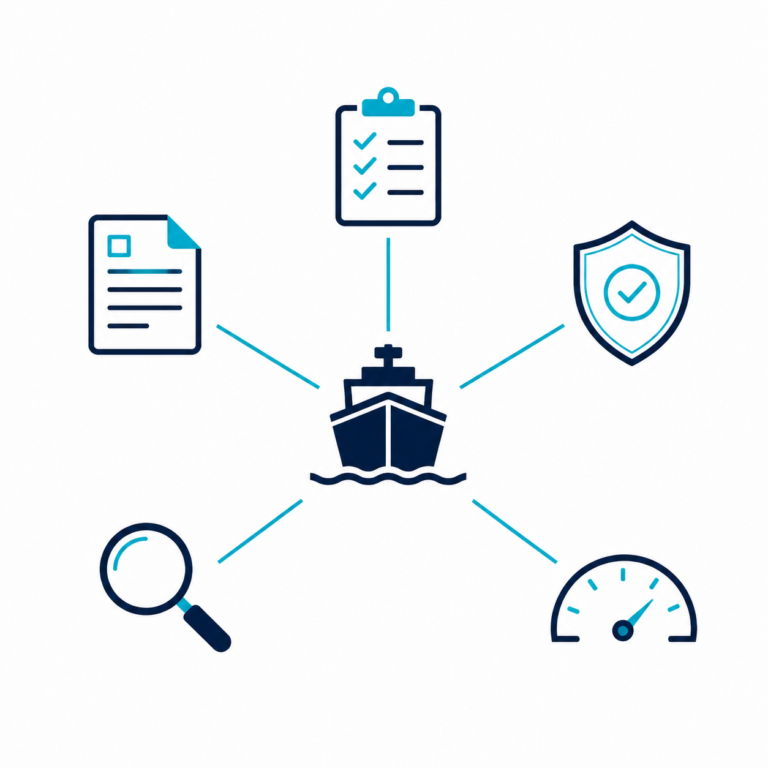
This is the gap MarineKPI was built to close. It isn’t a TMSA tool or a DryBMS tool specifically — it’s a single record for every navigation audit, cargo audit, engine room audit, mooring audit, safety audit, PSC deficiency, near miss, RISQ inspection, and SIRE 2.0 finding a fleet produces, with findings cross-referenced against TMSA elements, RISQ, and SIRE 2.0 categories as they’re entered — not reconstructed later.
That structure is what makes a TMSA Stage 4 submission or a DryBMS Performance-pillar self-assessment a matter of pulling a report rather than compiling one. A finding logged against a mooring audit shows up against the relevant TMSA element automatically; a repeat PSC category across the fleet is visible without someone manually cross-checking spreadsheets.
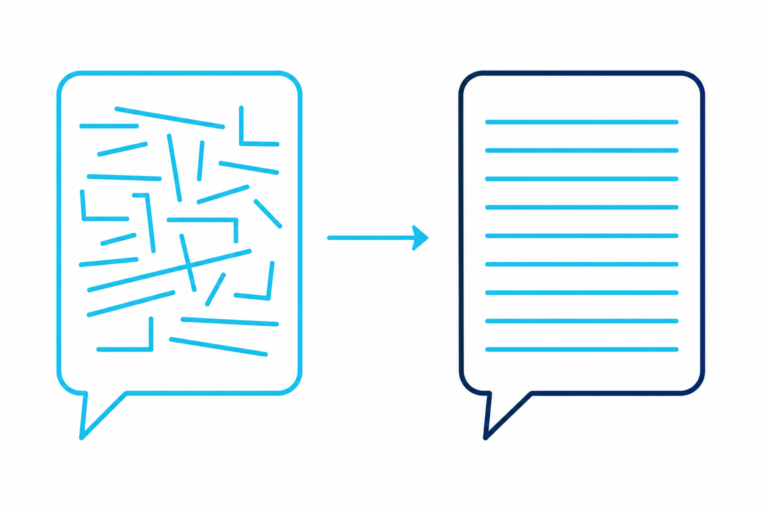
The platform’s AI tools address a narrower but related problem: the quality of the evidence itself. A rushed officer’s note — often written in a mix of languages an engine room actually runs in — gets carried into clear, auditable English without inventing facts or upgrading severity. That matters because both TMSA and DryBMS score on the quality of what’s written, not just whether a box was ticked.
What This Doesn’t Replace
None of this replaces the judgement an audit requires. MarineKPI organises and cross-references evidence — it doesn’t decide whether a finding is valid, and it doesn’t run the audit itself. The value is in what’s available when someone does: a navigation audit, a TMSA gap analysis, or a DryBMS self-assessment that draws from one connected record instead of five disconnected ones.
“If you’re managing a fleet toward TMSA resubmission, or looking at DryBMS ahead of where RISQ is clearly heading, getting TMSA and DryBMS compliance right is the conversation worth having before the evidence becomes the problem rather than the proof.
More from the MarineKPI Series