
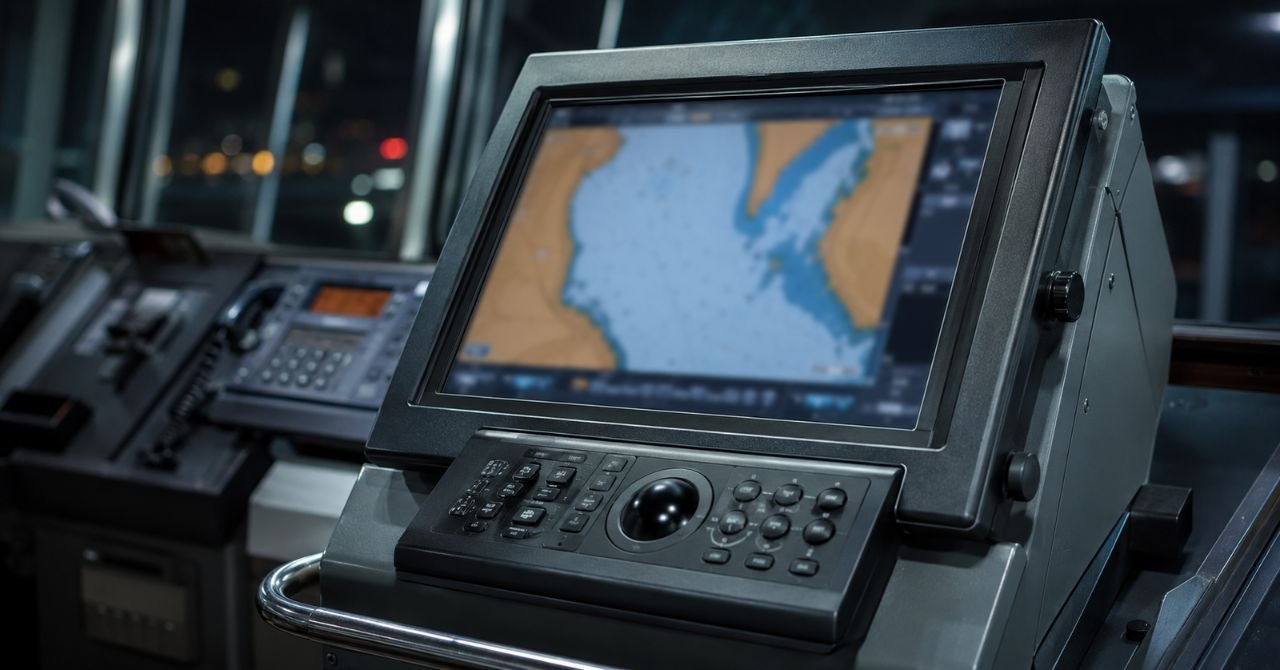
Most bridge teams know MSC.232(82) as the ECDIS performance standard. It has been operative since 2006 and is referenced in bridge procedure manuals, SMS documentation, and type-approval certificates across the global fleet. That reference is now running out of road — the ECDIS performance standards 2026 changeover is already live.
Resolution MSC.530(106)/Rev.1 was adopted at MSC 108 on 24 May 2024. It revokes the earlier MSC.530(106) entirely and establishes the next generation of ECDIS performance standards. The installation dates are already in effect. If your fleet is buying or specifying ECDIS equipment from 2026 onwards, the choice between standards is live today.
This article sets out what changed, what the installation date framework means in practice, and where the gap in most SMS documentation currently sits.
What Was Already Decided at MSC 106
Before getting to the ECDIS performance standards 2026 changeover, it helps to understand what the original MSC.530(106) — now revoked — had already introduced. The substantive technical shift was the move from the S-57 chart data standard to the S-100 series framework, specifically S-101 as the new ENC product specification. S-57 has underpinned ECDIS since the beginning. S-100 is the IHO’s universal hydrographic data model — a broader architecture that allows different data products to coexist and interoperate within a single navigation system.
MSC.530(106)/Rev.1 carries that foundation forward. The S-100 framework remains. What Rev.1 adds on top of it is a set of specific, mandatory capabilities that the original resolution did not include.
The ECDIS Performance Standards 2026 Installation Date Framework
The resolution sets out four distinct positions depending on when ECDIS equipment is installed:
Equipment installed before 1 January 1996 falls outside the scope of these dates entirely — carriage requirements from that era are a separate question.
Equipment installed on or after 1 January 1996 but before 1 January 2009 conforms to resolution A.817(19), as amended.
Equipment installed on or after 1 January 2009 but before 1 January 2026 conforms to MSC.232(82). This covers the bulk of the fleet operating today.
Equipment installed on or after 1 January 2026 but before 1 January 2029 may conform to either MSC.530(106)/Rev.1 or MSC.232(82). The operator has a choice during this window.
Equipment installed on or after 1 January 2029 must conform to MSC.530(106)/Rev.1. No choice at that point.
The word “installed” is defined carefully in the resolution. For newbuilds where the building contract is placed on or after 1 January 2029, any installation date on that ship falls under the Rev.1 requirement. For other ships, it is the contractual delivery date of the equipment — or the actual delivery date where no contract date exists — that determines which standard applies.
This matters because equipment ordered now for delivery in late 2028 could still fall under the choice window. Equipment ordered now for delivery after 1 January 2029 will not.
What Rev.1 Adds That MSC.232(82) Does Not
Comparing MSC.232(82) against ECDIS performance standards 2026 clause by clause, the additions are concentrated in three areas, with a smaller number of secondary changes.
Route exchange with shore. Section 11.3.4 requires ECDIS to be capable of exchanging, sending, and receiving both selected and alternative route plans with shore-based Maritime Service providers, using the IEC 63173-1 (S-421) format and the IEC 63173-2 secure communication standard. This did not exist in any form under MSC.232(82). Covered in detail below.
Voyage recording and VDR output. This is the addition most operators are likely to miss, because it sits inside a section — voyage recording — that looks unchanged at first glance. MSC.232(82) required ECDIS to log own-ship track and official chart data used, at one-minute intervals, for reconstruction purposes. Rev.1 adds a third category to that same logging requirement: changes to safety contour, look-ahead, and route monitoring alert settings. And critically, Rev.1 adds a new requirement — section 11.5.2 — that this data must be output to the voyage data recorder. MSC.232(82) has no equivalent provision anywhere. Under Rev.1, ECDIS safety settings become part of the VDR record, retrievable and reviewable after the fact. Under MSC.232(82), they simply are not captured at all — meaning the equipment side of this is only half the story; having the right playback procedure in place is what actually makes that recorded data usable during an audit.
Dynamic water level adjustment. Section 5.10 adds a new capability requirement: it should be possible to use dynamic water level adjustment on the safety contour, with an indication provided when in use. MSC.232(82) has no equivalent. This is an enabling requirement on the equipment side — it does not by itself solve the tidal depth problem, since it depends on a compatible dynamic tidal data product being available to feed it (the IHO’s S-104 gridded water level standard is the intended source, and remains under development and trial). But it establishes, for the first time, that ECDIS is required to be capable of using dynamic depth data rather than being permanently locked to static chart datum.
A smaller set of changes rounds out the picture: an upgraded alert tier for danger proximity (section 11.4.6 moves from a passive indication under MSC.232(82) to a mariner-selectable warning, caution, or indication under Rev.1), new monitoring-stage graphical indications for route legs near the safety contour or restricted areas that previously only applied at the planning stage, and a route schedule requirement (estimated departure and arrival times) attached to any exchanged route plan.
Everything else — core route planning mechanics, display requirements, backup arrangements, the calculation and accuracy provisions — carries forward from MSC.232(82) without substantive change.
What Section 11.3.4 Actually Requires
The route exchange capability is the most visible addition, so it is worth setting out precisely.
The requirement is that ECDIS must be capable of exchanging, sending, and receiving both selected and alternative route plans with shore-based Maritime Service providers. The exchange format is IEC 63173-1 — the S-421 route plan standard built on the S-100 framework. The communication interface is IEC 63173-2, which covers secure ship-shore communication. Both are mandatory for Rev.1 compliant equipment.
The resolution is explicit about how received route plans are to be treated. They are described as a basic indication of preferred intention and must be indicated by ECDIS as being for voyage planning purposes only. The use of any received route plan remains under the master’s control, in accordance with SOLAS V/34 and V/34-1. The master’s professional judgement and discretion are preserved in the text of the resolution itself.
Section 11.4.15 adds a complementary requirement: if the selected route is changed during a voyage, it should be possible to send the updated route plan to shore-based Maritime Service providers. And critically, a route plan received from shore must only be selected for monitoring after confirmation by the master. The confirmation step is not optional — it is written into the performance standard.
The SMS Documentation Gap
Most bridge procedure manuals and passage planning procedures in circulation reference ECDIS performance standards. The majority reference MSC.232(82). Some older documents still carry A.817(19). None of them anticipate two things that Rev.1 introduces: a shore-originated route plan arriving for the master’s review, and ECDIS safety settings being written to the VDR where they can be pulled for audit after the fact.
On the first point, no SMS reviewed for this article has a procedure for handling a shore-originated route input — who reviews it, who confirms it with the master, what the formal acknowledgement step looks like before that route can be selected for monitoring.
On the second, the gap is more about awareness than procedure. A remote VDR navigational audit conducted on Rev.1-compliant equipment will now show exactly what safety contour, look-ahead, and alert settings were in use at any point in a passage — data that simply was not being captured under MSC.232(82).
That visibility matters most in exactly the conditions where ECDIS safety contour behaviour is hardest to interpret — tidal port approaches, where the alarm can silently default away from the value the navigator actually set. Fleets running audits against this data need to know it exists before they can build review procedures around it.
Whether the cost premium of specifying Rev.1 equipment now, ahead of the 2029 deadline, is worth it for a given vessel depends on the operator’s relationship with shore-based Maritime Service providers, whether the fleet is already moving toward e-navigation services, and how the procurement timeline aligns with the 2029 hard cutover. What the resolution does is make that a decision, rather than a default.
What to Check Now
If you are a DPA or fleet superintendent, the practical review at this point is relatively contained.
Check what standard is referenced in your bridge procedure manuals and passage planning procedures. If they reference MSC.232(82) or A.817(19) and your fleet will be taking delivery of new or replacement ECDIS equipment during the 2026–2029 window, the SMS will need a procedure for shore-originated route inputs before that equipment enters service.
Check what standard is being specified in any current ECDIS procurement. Equipment suppliers and type-approval bodies will know whether a given unit is approved to MSC.232(82) or Rev.1. If delivery is after 1 January 2029, Rev.1 is the only compliant option.
If your fleet is already running Rev.1-compliant equipment, confirm your remote VDR audit process is aware that ECDIS safety settings are now part of the recorded data — and build that into what a navigational audit checks for.
Watch for the IMO operational guidance that paragraph 4 of the resolution anticipates. When it is adopted, it will likely form the basis of what bridge procedure manuals will need to address on the route exchange side.
The S-100 framework, the route exchange capability, and the extended voyage recording requirement together represent a significant shift in how navigation information moves between ship and shore, and in what becomes visible after the fact.
The ECDIS performance standards 2026 have been set. The procedural framework is still catching up.
More from the Amendment Log
- MSC-MEPC.5/Circ.17: What the New Remote Survey and Audit Guidance Actually Allows
- MSC.1/Circ.1704: What the New Bridge Software Maintenance Guidelines Cover, and What They Don’t
- SOLAS Pilot Transfer Arrangements 2028: What Ship Managers Need to Know
- The PFOS Ban Is in Force. The Survey Clock Is Already Running.
- Your STS operations manual references a guide that no longer exists in its old form
- The Ballast Water Management Plan Has Three New Requirements. Is Yours Current?
- The Lifting Appliances Manual: What the Regulation Requires, and What Actually Gets It Through Survey
- SOLAS II-1/3-13: What Ship Managers Need to Know About the New Lifting Appliance Requirements