
Most VDR requests I receive cover the port arrival. A smaller number include departure. Occasionally, the dataset contains anchor watch VDR data — not because it was specifically requested, but because the arrival or departure sequence encompassed an anchor leg.
The ship anchored in the fairway waiting for a berth, or weighed anchor as part of the outbound passage. The anchor phase was not what the DPA had in mind when commissioning the audit. It came along with the data they did ask for.
That anchor watch VDR data is almost never what anyone on the ship’s side was thinking about when they submitted the recording either. The crew know the arrival is being audited. They are rarely thinking about what the hours at anchor contain. That is, in my experience, where the most unguarded behaviour in the entire port call sits.
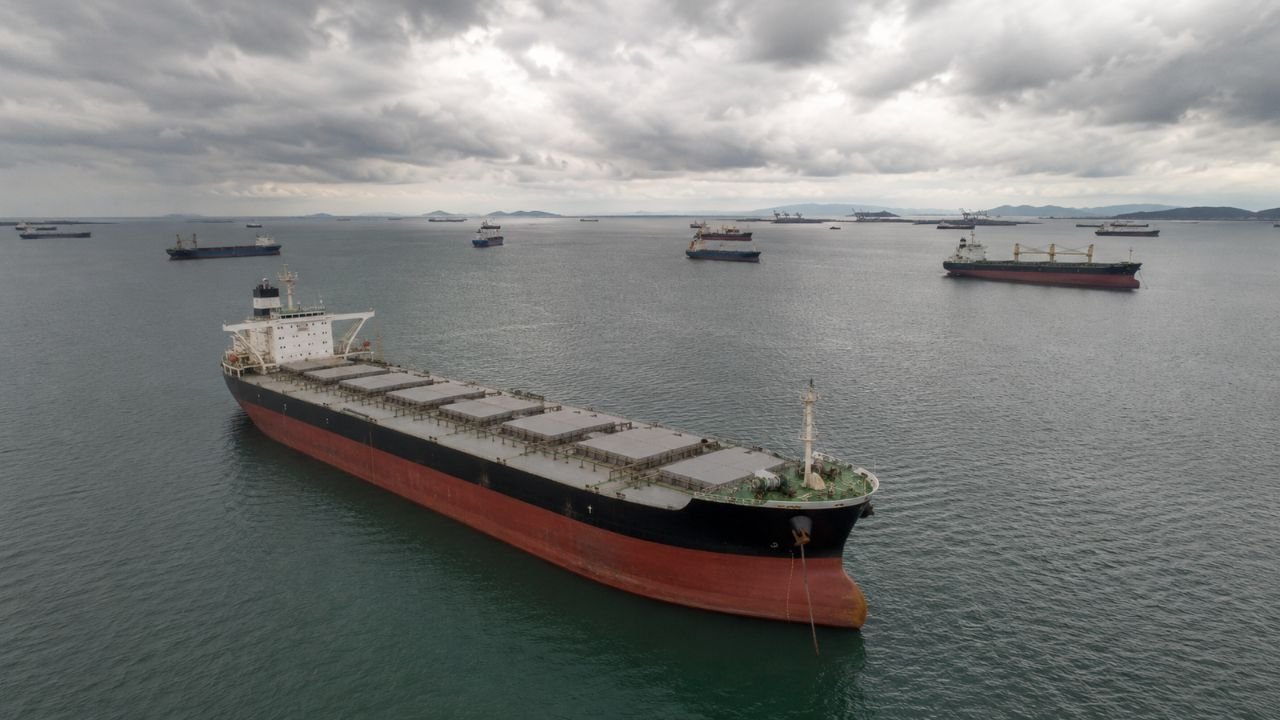
According to the OCIMF SIRE incident repository, 19.62% of all navigational incidents occur at anchor — the single largest location category in the dataset, higher than port approaches, harbour manoeuvring, and coastal waters. The data most DPAs are not requesting covers the phase of the voyage producing the most incidents. This article covers what that data contains across the three phases of an anchorage call: the approach and anchoring, the watch, and the departure.
The Approach and Anchoring
Approaching an anchorage is a navigational exercise that warrants the same structured attention as any other port approach. The anchor position needs to be selected against prevailing weather, predicted wind shifts, tidal stream, seabed, depth, and the swinging circles of neighbouring vessels. That selection should be on the ECDIS before the ship enters the anchorage area. The VDR captures whether it was.
What I more commonly find is that the approach to anchorage is treated informally — a position identified on the chart, a depth checked, an anchor let go. The preparation that would be automatic for a berth is compressed or absent. The bridge team is often in a reduced configuration because, in their minds, the ship is almost stopped.
The more significant finding, however, is who was on the fo’c’sle.
Most company SMS documents require an officer to be present and in charge of anchor stations — a position also reflected in OCIMF’s A Guide to Best Practice for Navigational Assessments and Audits. When companies include that requirement in their SMS, they have accepted it as a control measure.
The VDR answers whether that control measure was applied. The audio record will confirm whether an officer was communicating from forward during the anchoring operation or whether the bridge was receiving updates from the bosun alone.
The point here is not the bosun’s competence. Some operators have made a deliberate, documented decision that a competent bosun is sufficient to manage anchor stations, and that is a defensible position precisely because it is written into their SMS. The problem arises when the SMS requires an officer and the decision is made, watch by watch, to manage without one. That decision may be driven by fatigue, rest hour pressure, or the belief that it does not matter much at a quiet anchorage. What it produces is a non-conformance with the company’s own safety management system — documented, timestamped, on the ship’s own recording equipment. If something goes wrong during that operation, the VDR is not ambiguous about what was in place.
Anchoring as a Window into the Master’s Skill
“A pilotage arrival tells you relatively little about the Master’s own navigational judgment. The pilot is conn-ing. An anchorage arrival without a pilot is one of the few occasions where the Master’s skill is fully visible in the data — unfiltered and unassisted.”
The Master selects the position. He plans and executes the approach. He determines the speed of approach, the angle, the point of let-go, the amount of cable to use. The VDR captures all of it — the track over ground, speed profile, engine movements, heading, and his communications with the fo’c’sle throughout.
For fleet managers with newly promoted Masters, this data is among the most useful a VDR audit can produce. Not to find fault — to understand what the ship handling actually looks like in real operational conditions, which no simulator assessment can replicate. You can see whether the approach was planned or improvised, whether speed was managed correctly for the depth and the ground tackle, whether the let-go position matched what was plotted, and whether he communicated clearly and calmly under the pressure of the operation.
This is a low-cost, non-intrusive assessment using data the ship is already generating. For a fleet manager managing the development of a newly promoted Master, requesting the anchor leg of the next port call is a straightforward decision.
The Anchor Watch
The anchor watch is the phase of the port call most vulnerable to complacency. The urgency of arrival has passed. The departure is hours or days away. This is where bridge standards relax most visibly — and where the VDR records what nobody expects it to.
Once anchored and the immediate work complete, the nature of the watch changes — and anchor watch VDR data consistently shows that the quality of it changes with it. What the VDR captures during anchor watch is not dramatic. It is the absence of things that should be present.
Position monitoring is the foundation of a competent anchor watch. The ship’s position should be fixed at regular intervals and compared against the charted anchor position. The swing circle should be set and monitored on the ECDIS. When weather changes — wind strengthening, direction shifting — the OOW should be at the conn, not at the desk.
What commonly fills the anchor watch instead is coordination with launches and supply boats, communication with agents and port authorities, and paperwork that accumulated during the sea passage and now feels overdue. These are legitimate tasks. They are also tasks that do not require the OOW’s sustained attention to be drawn away from the anchor position. The VDR audio frequently shows a bridge that is busy — but busy with the wrong things.
Deck rounds during anchor watch exist for a practical reason. The anchor chain under load behaves differently as conditions change. A chain lying comfortably at anchoring may be bar-taut four hours later during a weather change. Radio contact between bridge and fo’c’sle during deteriorating conditions is not a formality — it is a check on what the bridge cannot see. When I find no bridge-to-fo’c’sle communication across a watch period during which wind speed increased significantly, that is a finding regardless of what the deck logbook records.
TThe position track is the clearest indicator in any anchor watch VDR review. A dragging vessel shows progressive displacement from the original anchor position on the VDR replay. What matters for the audit is not just that drag occurred — it is whether the bridge detected it, when, and what was done. In a number of cases I have reviewed, the position track shows displacement beginning well before any corrective action appears in the audio. The anchor watch was nominally running. The watch was not.
Weighing Anchor and Departure
The departure from anchorage carries the same structural risk as the arrival — a ship manoeuvring in constrained water, in proximity to other anchored vessels, with the main engine being worked up from a cold or idle state. It warrants the same bridge configuration.
In practice, it is frequently treated as less demanding. No pilot, no berth to aim for — just moving out to the fairway. The VDR does not share that assessment.
The same SMS compliance question applies in reverse. If the OOW was sent forward to manage the windlass party while the Master conn’d the ship from the bridge alone, that is on the audio record. The departure track, engine movements, and heading behaviour are all there.
There is an additional consideration with departures that does not apply in the same way to arrivals. At anchoring, the ship’s position relative to surrounding traffic is known. At departure, both the ship and the anchorage may have changed considerably in the interim. Vessels shift. Weather changes overnight. A ship that anchored in a comfortable position may be departing from a much tighter situation twelve hours later. The officer on the bridge during departure is not a procedural formality — he is the second qualified pair of eyes during a manoeuvre that may require rapid decisions.
Rest Hours and the Risk That Doesn’t Wait
Ports where crews think they can take it easy are precisely where things go wrong. An emergency does not consult the watchkeeping schedule before it arrives.
Rest hour pressure during port calls is real. Arrival and departure on consecutive watches, combined with anchor watch standing, creates genuine fatigue management challenges. Masters are making practical calculations under real constraints, and I do not dismiss that.
What that calculation frequently underweights is that an anchorage is not a safe pause in the voyage. It is a phase of it. The ship is lying in open or semi-sheltered water, exposed to weather, held in position by a single piece of ground tackle, in proximity to other traffic. The conditions that produced a comfortable anchorage at 1800 can change by 0200. The vessel that has been anchored safely for sixteen hours can begin dragging on the seventeenth.
If the SMS requires an officer at anchor stations and on anchor watch, that requirement represents the company’s own risk assessment, made in advance and in good faith. Operating below that standard to manage a scheduling problem does not change the risk — it adds a compliance failure on top of it. And if something goes wrong, the investigation will go to the SMS and then to the VDR. Both will be unambiguous about the gap between what was required and what was done.
What Anchor Watch VDR Data Captures: A Three-Tier Framework
Across anchor watch VDR datasets I have reviewed, findings tend to cluster into three levels:
Compliant Officer present at anchor stations fore and aft. Approach planned with anchor position plotted and swing circle set on ECDIS before entering the anchorage area. Position monitoring at regular intervals throughout the watch. Bridge-to-deck communication maintained during any weather change. Departure conducted with full bridge team.
Procedural gap Anchor stations conducted correctly but position checks inconsistent or absent for extended periods during the watch. OOW present on bridge but occupied with boat coordination or administrative tasks during weather deterioration. Bridge-to-fo’c’sle communication absent across relevant watch periods. No evidence of swing circle monitoring on ECDIS replay.
Non-conformance OOW not present at anchor stations contrary to SMS requirement. Position track shows progressive displacement from the charted anchor position with no corroborating corrective action in the audio record. Departure managed by Master alone without a qualified officer on the bridge. The recording documents the gap between SMS requirement and operational reality without ambiguity.
More from the VDR Series
→ Explore our VDR Navigational Audit Service — Book a VDR Navigational Audit
- The VDR Audit Guide: What the Bridge Data Shows, and Where to Start
- The VDR Audit Report Isn’t Just Good Practice. SIRE 2.0 Question 3.2.4 Asks For It By Name.
- Bridge Procedures Is a DryBMS Priority Area. It Still Doesn’t Move Your Score.
- The VDR Playback Software Is There. The Procedure That Covers It May Not Be.
- ECDIS in Tidal Ports: The Alarm That Stops Working When You Need It Most
- The Lookout During Port Approach Is on the Manning Matrix. The VDR Shows Whether Anyone Was Standing It.
- When Risk Becomes Routine, the Bridge Goes Quiet
- The First VDR Audit Your Fleet Runs Should Be Announced. Here’s Why.
- The VDR Track Shows More Than Where the Pilot Boarded
- The Radar Is Running. The VDR Shows Whether It’s Doing Its Job.
- When VDR Data Works For You, Not Against You
- Tug Bollard Pull, Ship Fittings, and the Conversation That Doesn’t Happen
- The Master Pilot Exchange: What the VDR Hears, and What Most Ships Leave Unsaid
- The Port Approach Is Already on Film. Most Managers Don’t Know It.
- The Radar Log Says Done. The VDR Says Otherwise.
- Passage Planning Mistakes Ships Make — And What the VDR Reveals
- Ghost Fix: What the Bridge Team Does When the Auditor Has Gone Home
- VDR Navigational Audits: What They Are, Why They Matter, and When to Do One
- How a VDR Navigational Audit Works — A Step-by-Step Guide for Ship Managers