

Objective evidence has a specific meaning in the ISM Code, and it isn’t a loose one. Clause 1.1.7 defines it precisely: quantitative or qualitative information, records, or statements of fact, based on observation, measurement, or test, that can be verified. Clause 1.1.9 builds directly on it — a non-conformity is an observed situation where objective evidence indicates a requirement hasn’t been met. Every audit finding on your SMS, every closeout response, every corrective action you’ve ever written was built to survive that test: not “this sounds right,” but “this can be checked against something real.”
That’s the actual argument for how AI search should work on a safety management system, and it has nothing to do with how sophisticated the technology is. It has to do with whether the answer it gives you would survive the same test your own audits run on.
What an Ungrounded Answer Actually Produces
Most AI search tools don’t fail loudly. They fail by sounding confident. Ask a general-purpose AI assistant a specific procedural question and it will often give you something plausible — phrased like a regulation, structured like a procedure, wrong in a way that isn’t obvious until someone checks. That’s not a bug in the sense of a crash or an error message. It’s the tool doing exactly what it was built to do: predict a likely-sounding answer. The problem is that a likely-sounding answer and objective evidence are not the same thing, and a document control system that’s supposed to produce the second one has no use for a tool that’s optimised for the first.
Put an ungrounded AI answer into a closeout response or a corrective action, and it inherits every property objective evidence isn’t supposed to have — plausible, unverified, and impossible to trace back to anything an inspector could actually check. The finding doesn’t get closed faster. It gets closed on a foundation that won’t hold if anyone asks where the answer came from.
Why Keyword Comes First, Not AI
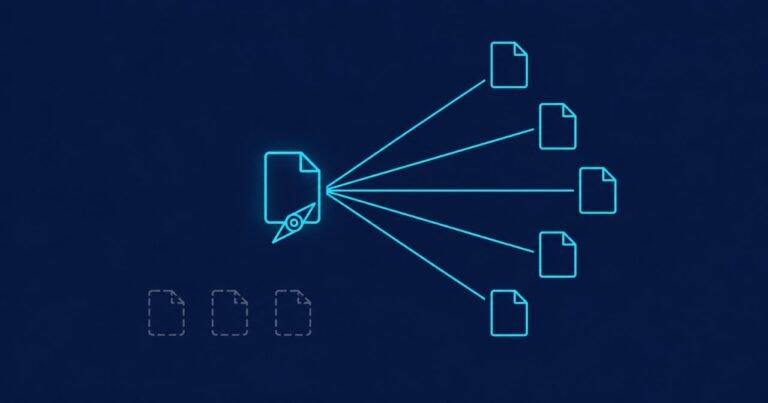
This is the actual reason exact-match search has to be tried before AI-assisted search, not the other way round — not because keyword matching is simpler or cheaper, but because a keyword match is definitionally grounded. It found your own words in your own document. There’s nothing to verify because there’s nothing generated. AI-assisted search only has a role at all when a question doesn’t share the manual’s own wording closely enough for keyword matching to find it — a rephrased question, a translated one, a crew member describing a fault in language the procedure itself doesn’t use.
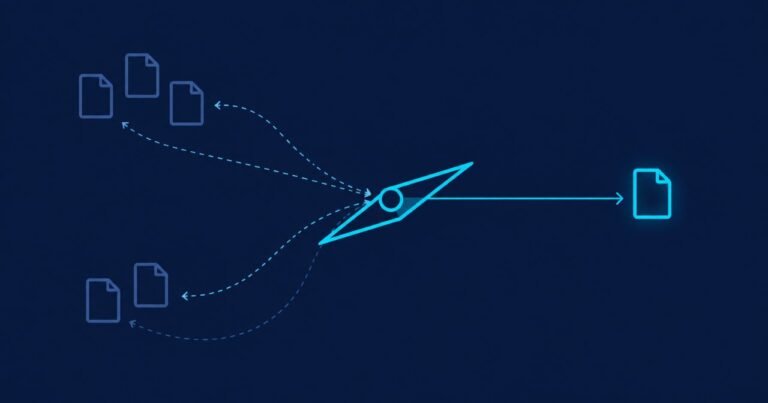
Even then, the honest version of that tool doesn’t generate a free-standing answer. It summarises the governing procedure’s actual text and hands that back, sourced. A crew member can search in Hinglish, mixed language, whatever they actually think in — a query like a fire flap valve fault described in exactly the words they’d use on the spot — and what comes back is a grounded summary of the real procedure, translated into their language, not a fluent-sounding invention. The distance between those two things is the entire distance between a search tool and objective evidence.
Where Wayfinder Fits In
This is the design decision Wayfinder is built around, and it’s worth being precise about what it does and doesn’t claim. It doesn’t make AI infallible — no search tool can promise that. What it does is refuse to let AI answer from nowhere. Exact keyword matching runs first because it’s inherently grounded. AI search only activates as a fallback, and even then it’s summarising your SMS’s actual text back to you, not generating a plausible regulation from pattern-matching alone. If an answer turns out to be wrong, that’s traceable to one of two places — the search misunderstood the question, or the underlying procedure itself needs a look — and either one is a real, checkable fact, not a shrug.
The Practical Point
An SMS search tool that can’t tell you where an answer came from is asking your crew to trust it on exactly the basis ISM 1.1.7 says isn’t good enough for anything else in your safety management system. The bar for a closeout response, a corrective action, or a finding was never “does this sound right.” It was always “can this be verified.” Worth applying the same bar to whatever’s answering the question in the first place.
See how Wayfinder keeps AI grounded in your own SMS →
More from the Wayfinder Series
→ Explore the Wayfinder Platform — See Wayfinder in Action